From Strategy to Learning Experience
AI is starting to become very prominent in our everyday lives. As a computer science graduate, it has always fascinated me how technology can be used more as a tool for humans rather than as full-on aid and care. When working with kids, I use AI as a tool to help turn my ideas into lessons and activities that are clear, engaging, and age-appropriate. AI should not replace the creativity, teaching, or hands-on learning experience we give children today. In this article, I describe how I use AI to bring my vision and lessons to life for students and show the outcomes of the prompts I used to receive the clearest and most responsive answers.
From My Written Plan to a Parent-Friendly Agenda
I first sat down and created the full event schedule myself, carefully thinking through the timing, lessons, activities, breaks, and overall flow of the day. I considered the full experience, from the moment parents and students arrived for check-in, to how much time each STEM lesson would realistically take, to the level of detail needed for each part of the agenda. As you’ll see throughout this article, I wanted every section of the schedule to have a clear purpose while still creating an experience that was organized, engaging, and easy for families to follow.
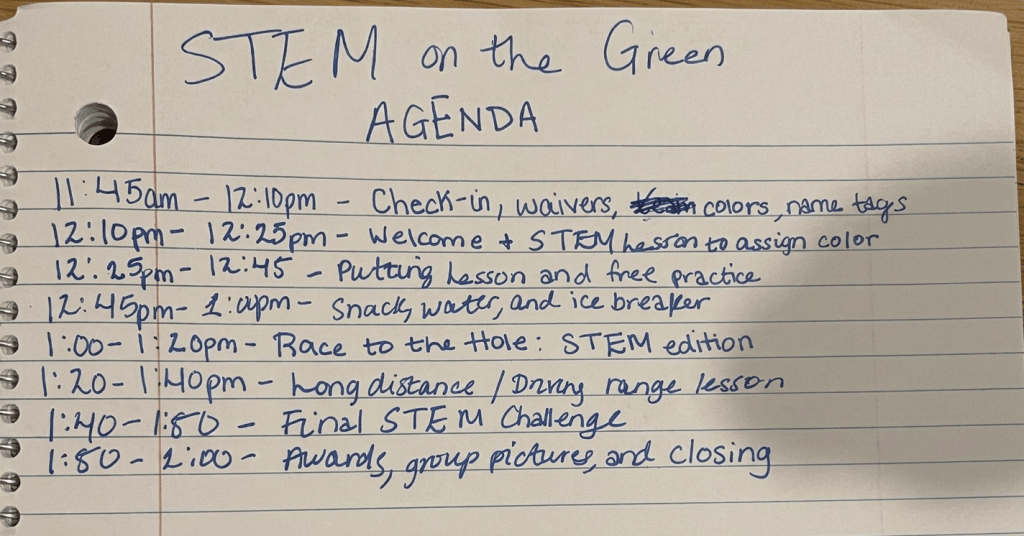
Using AI to Bring My Agenda to Life
I then used OpenAI’s ChatGPT to help transform my detailed event plan into an agenda that highlights the information parents and students actually need to see. I wanted the final design to use colors, symbols, and clear language to create excitement, make the schedule easy for kids to follow, and develop a format that could be updated and reused for future STEM on the Green events. The planning, activities, and timing were already established; AI helped me organize and present that information in a more engaging and accessible way.

What I Learned
This project strengthened my ability to give AI clear, intentional instructions while still maintaining ownership of the overall strategy, content, and creative direction. It also reinforced the importance of using AI as a support tool and not a replacement for the planning, decision-making, and human creativity that shape the final experience..

